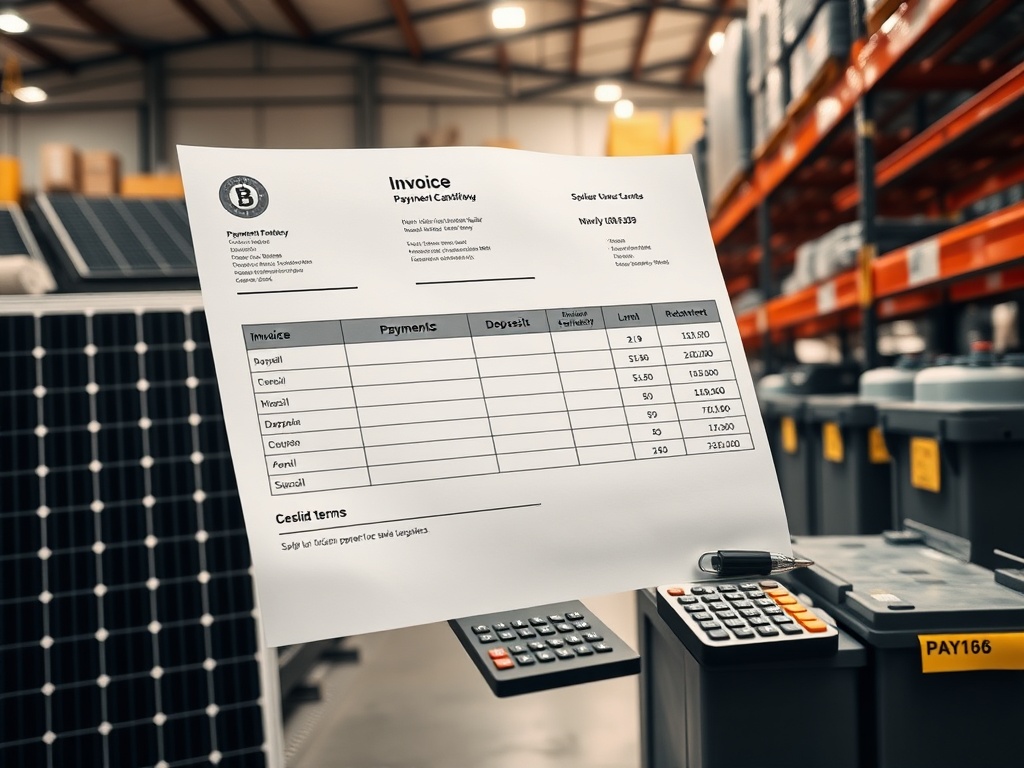
Managing cashflow is one of the biggest challenges for solar installation businesses. Suppliers often expect payment before or shortly after delivering equipment, while clients may only pay after installation is complete. Understanding supplier payment terms can help installers avoid financial pressure and maintain good business relationships.
The Cashflow Trap — How Installers Get Squeezed Between Supplier and Client
Solar projects require expensive equipment to be purchased before work begins. If clients delay payment, installers may have to cover supplier costs, staff salaries, transport, and other expenses from their own funds.
Poor cashflow can lead to:
- Late supplier payments
- Delayed projects
- Reduced profit
- Difficulty purchasing stock
- Strained supplier relationships
Planning payment schedules carefully helps reduce these risks.
Term Structures — COD, Deposits, Split Payments and Credit Limits
Suppliers may offer different payment options depending on your business history and credit profile.
Cash on Delivery (COD)
COD requires payment before or when equipment is collected or delivered.
Advantages
- No long-term debt
- Better spending control
- Simple account management
Disadvantages
- High upfront costs
- Greater pressure on cashflow
Deposits
Many suppliers require a deposit before ordering equipment, especially for large or special-order projects. The remaining balance is usually paid before delivery.
30-Day Credit Terms
Established installers may qualify for 30-day credit accounts, allowing equipment to be purchased before payment is due.
Benefits include:
- Improved cashflow
- Easier project planning
- Greater purchasing flexibility
Always pay on time to avoid interest charges or losing credit facilities.
Credit Limits
Credit accounts usually have spending limits based on your payment history and financial standing. Managing your account responsibly can help increase these limits over time.
Risk Controls — Purchase Order Discipline, Client Deposit Staging and Retention Planning
Good financial controls help protect your business.
Use Purchase Orders
Purchase orders create a clear record of equipment ordered, prices, and delivery dates. They also help prevent disputes.
Collect Client Deposits
Requesting a deposit before ordering equipment reduces financial risk and shows client commitment.
Many installers also use staged payments, such as:
- Deposit when the quote is accepted
- Progress payment before installation
- Final payment after commissioning
This keeps supplier payments aligned with incoming client payments.
Protect Working Capital
Keep enough cash available for everyday business expenses such as salaries, fuel, insurance, and unexpected costs.
Dispute Prevention — Documenting Delivery Acceptance and Invoicing Milestones
Good documentation helps prevent payment disputes.
When equipment arrives:
- Check quantities and model numbers
- Inspect for damage
- Keep signed delivery notes
- Store invoices and purchase orders
Issue invoices promptly when project milestones are reached. Clear payment milestones in quotations and contracts help clients understand when payments are due.
Build Strong Supplier Relationships
Reliable payment builds trust with suppliers. Businesses that pay on time are more likely to receive:
- Better pricing
- Flexible payment terms
- Priority stock allocation
- Faster service
If cashflow problems arise, communicate with suppliers early rather than missing payment deadlines.
Conclusion
Choosing the right supplier payment terms is essential for maintaining healthy cashflow in a solar installation business. Whether using COD, deposits, or 30-day credit, installers should match supplier payments with client payment schedules whenever possible.
Good planning, clear documentation, and responsible financial management help reduce risk, strengthen supplier relationships, and support long-term business success.
