Introduction to Mounting Systems
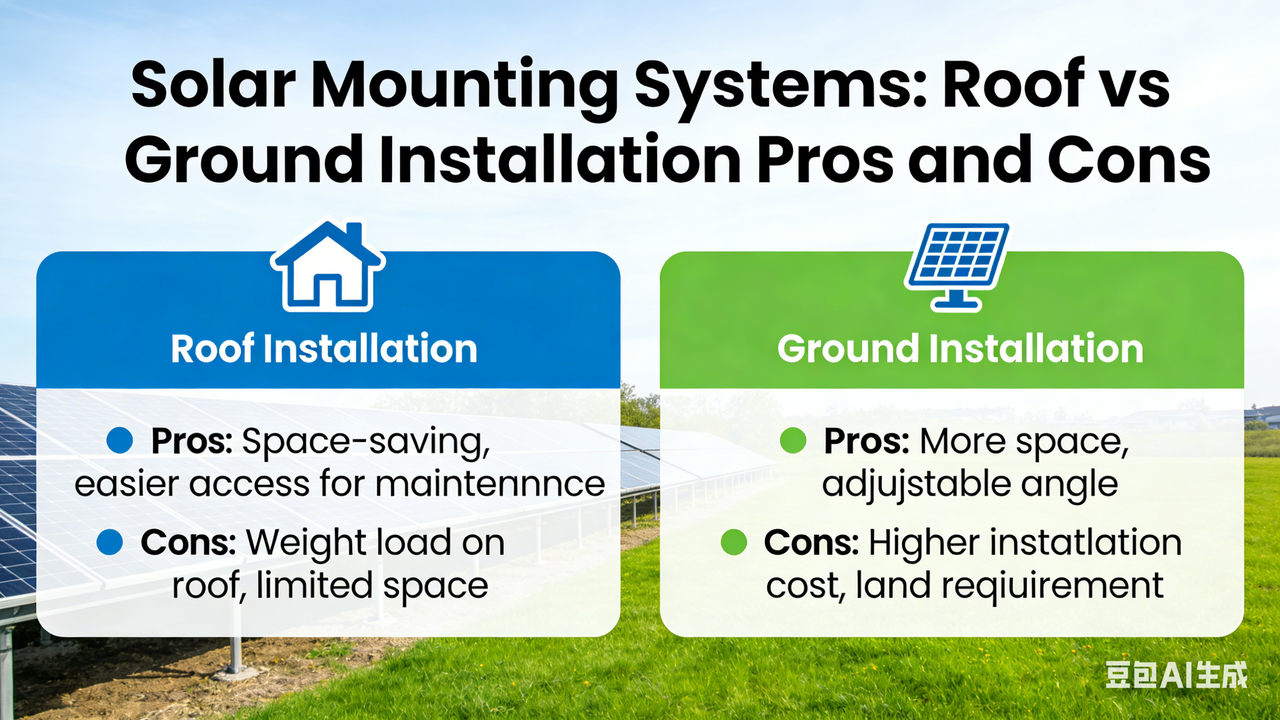
The mounting system is the foundation of any solar installation. It supports the panels, optimizes their angle for maximum sun exposure, and ensures long-term structural integrity. Choosing between rooftop and ground-mounted systems is one of the first decisions when planning a solar project.
Rooftop Mounting Systems
Advantages:
- No land required—utilizes unused roof space
- Lower installation costs compared to ground systems
- Better suited for residential and constrained urban locations
- Minimal ground-level obstructions
- Reduced cable runs to inverter placement
Disadvantages:
- Limited expansion capacity—space constraints
- Roof structural integrity assessment required
- Weather exposure and potential water damage risk
- Maintenance can be challenging and expensive
- Building permits and HOA approval may be required
- Limited flexibility for optimal panel orientation
Best For:
Residential installations, retrofit projects, urban/commercial buildings with available roof space, installations where land is limited or costly.
Ground-Mounted Systems
Advantages:
- Unlimited expansion capacity
- Optimal panel orientation and tilt angle possible
- Easy maintenance and cleaning access
- Better ventilation—cooler panels = higher efficiency
- Can incorporate tracking systems for maximum energy yield
- Easier structural upgrades and modifications
Disadvantages:
- Requires available land—not suitable for constrained areas
- Higher upfront installation costs
- Foundation/concrete work required
- Land use considerations and zoning regulations
- Longer cable runs increase electrical losses
- Potential shading from surrounding structures
Best For:
Large-scale commercial installations, industrial solar farms, open spaces (agricultural land, parking lots), projects requiring expansion capacity, systems needing optimal energy output.
Cost Comparison
10kW System Installation Costs (South Africa)
Rooftop Installation:
- Mounting hardware: R8,000-12,000
- Installation labor: R6,000-10,000
- Structural assessment: R2,000-4,000
- Total: R16,000-26,000
Ground-Mounted Installation:
- Mounting hardware: R12,000-18,000
- Foundation/concrete: R8,000-15,000
- Installation labor: R10,000-15,000
- Site preparation: R3,000-8,000
- Total: R33,000-56,000
Durability and Maintenance
Rooftop Systems:
Exposed to weather elements including wind, rain, and temperature extremes. Corrosion-resistant aluminum frames are essential. Typical lifespan: 25-30 years with proper maintenance.
Ground-Mounted Systems:
Foundation integrity is critical. Concrete footings must be properly installed to prevent settling. Ground clearance of 1-2 meters helps with cleaning and reduces flooding risk. Typical lifespan: 30-40 years.
South African Context
In South Africa, load shedding and high electricity costs drive commercial interest in solar. Ground-mounted systems are increasingly popular for warehouses, industrial facilities, and commercial properties with available land. Rooftop systems dominate residential installations where space is limited.
The choice often depends on:
- Available space and site constraints
- Project budget and ROI timeline
- System expansion plans
- Roof condition (for rooftop systems)
- Load shedding patterns and backup power needs
Key Takeaways
- Rooftop: Lower cost, space-efficient, suitable for residential
- Ground-mounted: Scalable, optimal performance, better for commercial/industrial
- Consider long-term maintenance and expansion needs
- Site assessment is critical for making the right choice
- Hybrid approaches (mixed roof and ground) may be optimal for some installations
