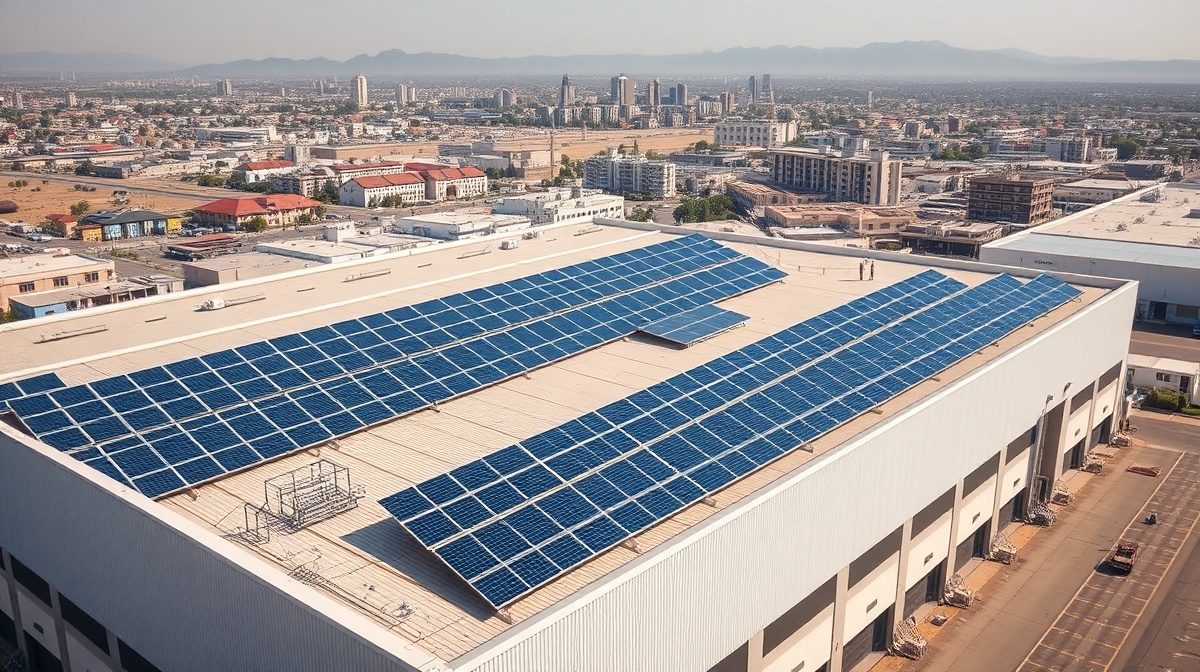
The Crisis Driving the Opportunity
Stage 6 load shedding has fundamentally changed how South African businesses operate. Facilities experiencing 4-6 hours of daily power outages cannot afford disruption. This urgency has created an unprecedented market for commercial solar installations.
Unlike residential customers who view solar as investment, commercial customers see solar as operational necessity—a critical infrastructure investment to ensure business continuity.
Commercial Load Shedding Impact Analysis
Financial Impact on Businesses
A typical 500 kW commercial facility losing 4 hours daily to load shedding experiences:
- Daily energy loss: ~2,000 kWh
- Revenue loss: R1,500-3,000 (depending on business type)
- Annual economic impact: R450,000-900,000
This financial pressure forces immediate investment in backup power—making solar the default solution.
Who's Adopting Solar First?
- Manufacturing: Cannot tolerate production downtime
- Warehouses/Logistics: Climate control and operations critical
- Retail/Shopping Centers: Customer experience and security systems
- Data Centers: 24/7 operation non-negotiable
- Healthcare: Life-safety systems require backup power
- Hospitality: Guest experience and revenue dependent on power
System Design Strategies for Load Shedding
Strategy 1: Hybrid Solar + Battery Systems
The most popular approach combines solar generation with lithium battery storage for seamless backup power during outages.
- 4-6 hour battery capacity to cover typical load shedding duration
- Solar generation offsets peak daytime demand
- Battery recharges during evening hours before next load shedding cycle
Strategy 2: Peak-Shaving Systems
Oversized solar arrays with moderate battery capacity to reduce peak demand charges during operational hours.
Strategy 3: Time-of-Use Optimization
Solar generates during daytime while batteries charge from grid during low-rate periods, then discharge during peak rate/load shedding windows.
Business Case Example: Manufacturing Facility
Scenario: 100kW Manufacturing Plant
Load Profile: 100kW continuous, Stage 6 load shedding (4 hrs/day)
System Designed:
- 120kW solar array
- 80kWh battery system (covers 4-hour outage)
- Hybrid inverter for seamless switching
Financial Analysis:
- System cost: ~R1,200,000
- Daily energy cost savings: ~R400-600
- Monthly savings: ~R12,000-18,000
- Annual savings: ~R144,000-216,000
- Payback period: 6-8 years
Plus intangible benefits: Business continuity, operational security, customer confidence, competitive advantage.
Installer Opportunities in This Market
Rapid Project Pipeline
Commercial customers need solutions urgently. Decision-making cycles have compressed from 6-12 months to 2-3 months. Fast-responding installers capture more projects.
Higher-Value Projects
Commercial systems are 10-50x larger than residential, with significantly higher profit margins. A single 100kW project can be worth more than 10 residential installations.
Long-Term Service Contracts
Commercial customers value maintenance contracts, monitoring services, and technical support. This creates recurring revenue streams beyond initial installation.
Client Expansion Potential
Once a commercial customer invests in solar, they often expand the system or add battery storage later. Early customer relationships lead to multiple projects.
Key Takeaways
- Load shedding has created urgent commercial solar demand
- Hybrid solar + battery systems are standard for load shedding mitigation
- Commercial systems offer 10-50x higher value than residential projects
- Business continuity justifies ROI over 5-8 years
- Service contracts provide stable, recurring income
- Early market positioning creates long-term client relationships
